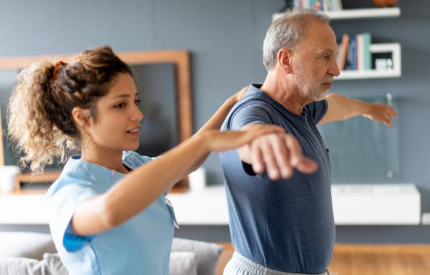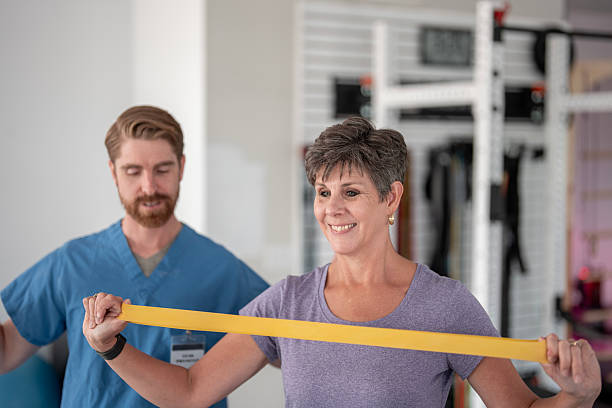
In the pursuit of health and vitality, an ancient Eastern sport that is increasingly favored by elderly people worldwide is Tai Chi. This traditional martial arts originated from China is like a brilliant treasure, not only containing profound cultural heritage, but also showing amazing effects in promoting the physical health of the elderly.
The origin and development of Tai Chi
Tai Chi has a long and rich history, dating back hundreds of years to China. According to legend, it was originally born as a form of martial arts, integrating the philosophical ideas of Taoism, the meridian theory of traditional Chinese medicine, and traditional martial arts techniques. Through continuous improvement and development by generations of inheritors, Tai Chi has gradually evolved into various schools, such as Chen, Yang, Wu, Wu, Sun, etc. Each school has its own unique style and characteristics, but they all follow the core principles of Tai Chi. From its initial silent spread among the people to its widespread dissemination around the world, Tai Chi has witnessed the changes of time and always exudes a unique charm.
The unique characteristics of Tai Chi
Slow and gentle movements
One of the most prominent features of Tai Chi is its soothing and gentle movements. It is not as explosive as some intense sports events, but rather follows a flowing rhythm. Every movement is smooth and rounded, like a spring breeze brushing against the face, gently moving various parts of the body. This slow movement allows elderly people to easily keep up with the rhythm during practice, avoiding physical injuries caused by rapid movement. For example, in the classic action of “cloud hand”, the arm moves slowly and elegantly as if shuttling through clouds, driving the body’s center of gravity to smoothly shift.
Mind and body
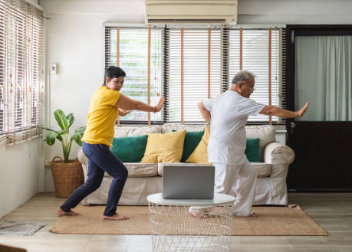
Tai Chi emphasizes the harmonious unity of body and mind. Practitioners need to coordinate deep and even breathing while performing movements, focusing their attention on the details of each movement. This high degree of integration of body and mind not only helps to improve physical coordination, but also allows practitioners to find a peaceful spiritual habitat in their busy lives. When elderly people immerse themselves in practicing Tai Chi, they can temporarily forget about external troubles and pressures, focus on their current self feelings, and achieve a state of physical and mental relaxation.
Integrity and coherence
The movements of Tai Chi emphasize integrity, with each move interconnected to form a coherent whole. The whole set of boxing techniques is like a beautiful painting, with each movement being a stroke in the painting, together forming a harmonious whole. This holistic and coherent exercise method can comprehensively exercise various parts of the elderly’s body, including muscles, bones, joints, and nervous system. For example, in the “pulling the tail of a sparrow” movement, there are multiple movements such as bowing, stroking, squeezing, and pressing, which work together to fully exercise the upper and lower limbs, as well as the trunk and limbs.
The benefits of Tai Chi for the physical health of the elderly
Enhance body flexibility
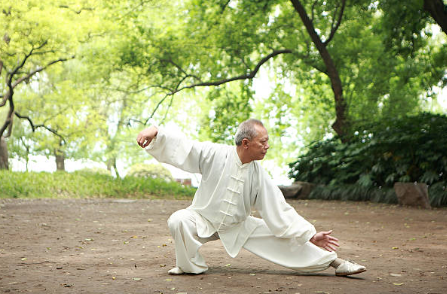
As people age, their physical flexibility gradually decreases and their range of joint movement is also limited. The various stretching and twisting movements in Tai Chi can effectively stretch muscles and ligaments, increasing joint flexibility. By persistently practicing Tai Chi for a long time, elderly people can clearly feel that their bodies have become more flexible, and daily movements such as bending and turning have become more relaxed and effortless. For example, elderly people who frequently practice Tai Chi can perform movements such as bending over to tie shoelaces and turning around to grab things more smoothly than those who do not practice, reducing the risk of injury caused by physical stiffness.
Enhance muscle strength and balance ability
Although the movements of Tai Chi may seem gentle, it actually has a significant effect on muscle strength training. During the practice process, the body needs to maintain a certain posture and balance, which requires muscles to continuously exert force. By constantly repeating these movements, the muscle strength of the elderly is enhanced, especially in the legs, waist, and core muscle groups. Meanwhile, many movements in Tai Chi require practitioners to maintain balance while moving, which is crucial for improving the balance ability of the elderly. Good balance ability can effectively prevent falls in the elderly and reduce the risk of serious injuries such as fractures caused by falls. Research has shown that elderly people who regularly practice Tai Chi have a significantly lower incidence of falls compared to those who do not practice.
Improve cardiovascular function
Tai Chi is an aerobic exercise, although the intensity of the exercise is relatively low, long-term practice can effectively improve cardiovascular function. When practicing Tai Chi, breathing becomes deeper and more even, which helps increase oxygen intake and promote blood circulation. Meanwhile, Tai Chi can also regulate blood pressure, lower blood lipids, and reduce the risk of cardiovascular disease. For elderly people with cardiovascular diseases such as hypertension and hyperlipidemia, moderate Tai Chi practice can serve as an auxiliary treatment to help them better control their condition and improve their quality of life.
Relieve chronic pain
Many elderly people suffer from chronic pain, such as arthritis, cervical spondylosis, lumbar disc herniation, etc. The gentle movements and overall regulating effect of Tai Chi can effectively alleviate these chronic pain symptoms. By practicing Tai Chi, elderly people can enhance muscle strength, improve joint stability, reduce joint pressure, and alleviate pain. For example, for elderly people with knee osteoarthritis, some low-intensity leg flexion and extension movements in Tai Chi can help them enhance the muscle strength around the knee joint, reduce the burden on the knee joint, and relieve pain and swelling.
The positive impact of Tai Chi on the mental health of the elderly
Reduce stress and anxiety
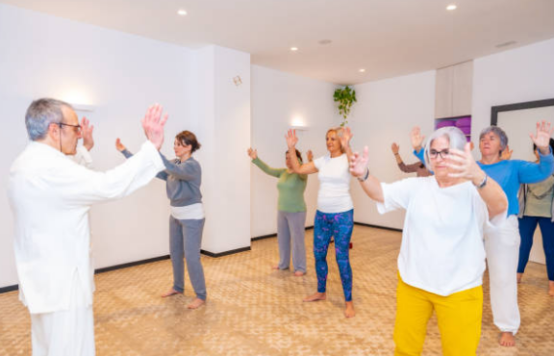
In modern society, elderly people also face various pressures and anxieties, such as concerns about their health and adaptation to life changes. The practice of Tai Chi is a process of physical and mental relaxation, which can help elderly people relieve stress and anxiety. When they focus on the movements and breathing of Tai Chi, they can temporarily forget about external troubles and find inner peace. Research has found that elderly people who practice Tai Chi for a long time have significantly lower levels of anxiety and depression than those who do not practice, and their psychological state is more positive and optimistic.
Enhance cognitive abilities
As people age, their cognitive abilities gradually decline, such as memory loss and lack of concentration. The practice of Tai Chi requires practitioners to concentrate, remember the sequence and essentials of movements, which has a positive effect on exercising the brain function of the elderly. At the same time, some movements in Tai Chi also require practitioners to perceive space and coordinate their bodies, which helps improve the cognitive ability and reaction speed of the elderly. Studies have shown that elderly people who regularly practice Tai Chi perform better on cognitive function tests than those who do not practice, and their brain aging rate is relatively slower.
The promotion and popularization of Tai Chi worldwide
Nowadays, Tai Chi is no longer just a traditional cultural heritage of China, it is moving towards the world with its unique charm. In many countries and regions, there are specialized Tai Chi clubs and training institutions that attract a large number of elderly people to participate. For example, in European and American countries, more and more elderly people are beginning to recognize and love Tai Chi. By participating in Tai Chi classes, they not only improve their physical health, but also gain a deeper understanding of traditional Chinese culture. At the same time, some international organizations are actively promoting the globalization of Tai Chi, organizing various Tai Chi competitions and exchange activities, and promoting exchanges and cooperation among Tai Chi enthusiasts from different countries and regions.
Tai Chi, as an ancient yet modern form of exercise, is undoubtedly an excellent choice for elderly people to strengthen their bodies and exercise. It brings new vitality and hope to the lives of the elderly with its unique characteristics and significant health benefits. Whether in the East or the West, more and more elderly people are using Tai Chi to start a healthy and happy old age. If elderly people around you are still struggling to find a suitable way of exercise, it is recommended that they try Tai Chi and let this Eastern treasure shine brightly on them.