How to protect joints during exercise is of utmost importance in the topic of elderly health. For elderly people whose joints are gradually becoming fragile, water exercise is an ideal fitness choice. It not only brings many health benefits, but also minimizes the impact on joints to the greatest extent possible. Today, let’s explore in detail why water sports are so suitable for the elderly.
The unique advantages of water sports on joints
Reduce joint pressure
Water has buoyancy and can reduce the weight of the body. According to estimates, a person’s weight in water is only about one tenth of that on land. This means that when elderly people exercise in water, the pressure on their joints is significantly reduced. For example, when walking on land, the knee joint needs to withstand several times the weight of the body, while walking in water, this pressure is significantly reduced, greatly reducing the risk of joint wear and tear. It is very friendly for elderly people with joint diseases such as osteoarthritis.
Provide natural buffering
The resistance of water can provide natural cushioning for movement, making movements smoother and softer. When elderly people perform movements such as stretching and bending in water, the buffering effect of water can prevent sudden impact on joints, effectively protecting their stability and flexibility. Compared to high-intensity aerobic exercise on land, water exercise has a more significant protective effect on joints.
Water sports suitable for the elderly
Walking in the water
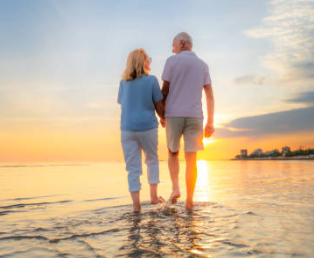
Water walking is the most basic and simple water exercise. Older people can walk normally in waist deep water, just like on land, by adjusting their stride and speed to increase exercise intensity. This exercise method can exercise leg muscles, enhance leg strength, and exert minimal pressure on knee and hip joints. In Europe and America, many community swimming pools offer water walking courses specifically for the elderly. Under the guidance of coaches, the elderly enjoy the fun of water sports while exercising their bodies.
water yoga
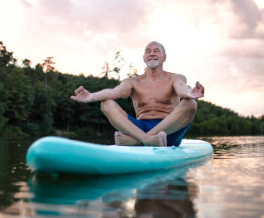
Water yoga combines traditional yoga with the characteristics of water to create a unique exercise experience. Performing yoga movements in water, such as tree and triangle movements, can help elderly people more easily complete some difficult movements on land with the help of water buoyancy, while also better stretching muscles and joints. The resistance of water can also increase the challenge of exercise, improve exercise effectiveness, and further enhance the flexibility and balance of the body.
Aerobic exercise on water
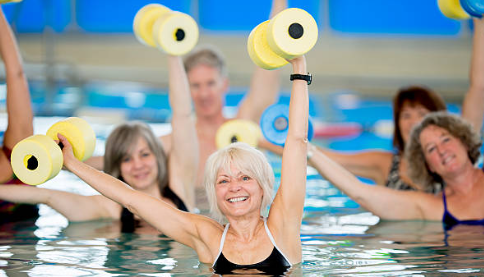
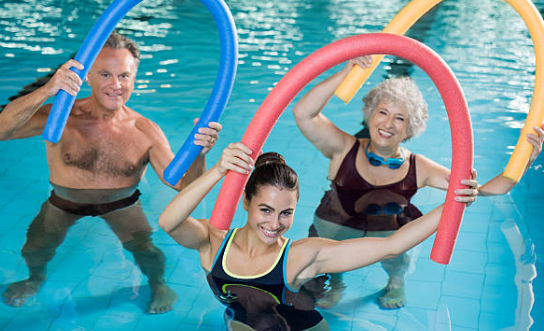
Water aerobic exercise includes various simple aerobic movements such as jumping, kicking, and paddling in water, which is completed in water and are full of vitality without causing excessive burden on joints. Usually, this type of exercise is led by professional coaches and accompanied by dynamic music, allowing elderly people to achieve fitness goals in a joyful atmosphere. In fitness centers in European and American countries, water aerobic exercise courses are deeply loved by the elderly and have become a popular choice for their daily fitness.
Precautions for water sports
safety first
Before engaging in water sports, it is essential to ensure the safety of swimming pool facilities and meet water quality standards. It is best for elderly people to exercise in places with dedicated care, such as swimming pools equipped with lifeguards. At the same time, it is necessary to control the intensity and duration of exercise reasonably according to one’s physical condition and exercise ability, in order to avoid excessive fatigue.
Warm up and relax well
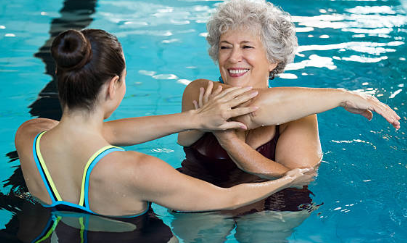
Even when exercising in water, warm-up and relaxation activities are essential. Warm up can be done by slowly walking in shallow water, moving joints, etc., to help the body adapt to the exercise state. After exercise, do appropriate stretching and relaxation to help relieve muscle fatigue and reduce discomfort after exercise.
keep warm
After leaving the water, the body loses heat quickly. Elderly people should dry their bodies in a timely manner, wear warm clothing, and avoid catching a cold. Especially in autumn and winter, it is important to pay attention to keeping warm to prevent discomfort caused by the cold.
Water sports, as a joint friendly fitness method for the elderly, can effectively exercise the body and protect joint health. I hope more elderly people can try water sports and enjoy the health and happiness it brings. If you or an elderly person around you have already experienced water sports, please feel free to share your experience and feelings.