
For elderly people who are passionate about outdoor sports, crutches are not just auxiliary tools, they are more like loyal and reliable companions, playing a crucial role in ensuring safety and enhancing the sports experience. At the same time, choosing the right cane is also the key for elderly people to fully utilize its advantages for outdoor sports.
The auxiliary role of crutches in outdoor sports for the elderly
Enhance balance and stability
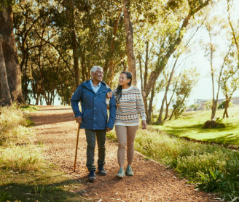
As people age, their physical balance gradually decreases. During outdoor activities such as walking or hiking, even a small bump or uneven road surface can become a risk of falling. The cane can provide additional support points for the elderly, increase the contact area with the ground, and help them maintain better body balance during walking. Whether on winding mountain trails or stone roads in city parks, crutches are like the third foot of a stable tripod, allowing elderly people to walk more steadily and greatly reducing the risk of accidental falls.
Reduce joint pressure
The joints of elderly people often face varying degrees of wear and degradation. During outdoor exercise, the weight of the body can cause significant pressure on lower limb joints such as the knee and hip joints. Using crutches can share some of the body weight and reduce the burden on these joints. Taking walking as an example, by transferring some weight to a cane, the pressure on the joints can be dispersed, effectively relieving joint pain and enabling elderly people to complete exercise more easily and comfortably. This is particularly important for elderly people with joint diseases such as osteoarthritis, as crutches provide them with the possibility to continue enjoying the fun of outdoor sports.
Expand range of motion and endurance
With the assistance of crutches, elderly people will have more confidence when exercising outdoors, and thus be able to expand their range of motion. Areas that were previously feared due to physical exhaustion or complex road conditions can now be attempted with the help of crutches. The cane provides additional strength support for the elderly to a certain extent, making them more effortless during walking, climbing and other sports, thus enabling them to persist in longer periods of exercise and improve their endurance. For example, when hiking in the suburbs, canes can help elderly people overcome some steep roads, allowing them to explore wider outdoor spaces in depth.
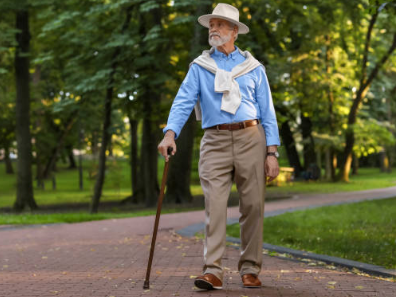
Key points for choosing crutches
Material selection
Lightweight and sturdy metal materials: crutches made of metal materials such as aluminum alloy have the characteristics of light weight and high strength. Lightweight can reduce the burden on elderly people when using it, and holding it for a long time will not make them feel too tired; Sturdy can ensure that the cane is not easily deformed or damaged when bearing body weight, providing reliable support. These types of crutches are usually treated with special surface treatment, rust proof and durable, suitable for various outdoor environments.
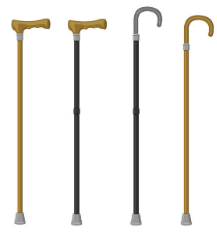
High strength carbon fiber material: Carbon fiber crutches have been a popular choice in recent years, with extremely light weight and excellent strength and toughness. Compared to metal crutches, carbon fiber crutches are more lightweight and can greatly reduce the travel burden for elderly people who need to carry crutches for outdoor activities for a long time. Moreover, carbon fiber material also has good corrosion resistance, making it less susceptible to damage even when used in humid outdoor environments.
Natural wooden material: Wooden crutches have a natural and comfortable feel, and their appearance is also relatively antique. Some high-quality hardwood materials, such as oak, walnut, etc., after careful processing, the strength and durability of the cane can also meet daily use needs. However, wooden crutches are relatively heavy and prone to deformation due to moisture in humid environments, so the selection needs to consider the usage scenario.
Height adjustment function
Easy to operate adjustment method: When choosing a cane, ensure that its height adjustment function is easy and convenient to operate. The ideal cane should be equipped with clear scale markings to facilitate elderly people to accurately adjust to the height that suits them. Some crutches use push buttons or rotating adjustment devices, allowing elderly people to easily adjust their height with just one hand, meeting the needs of different terrains and personal physical conditions.
Accurately adapting to individual height: The appropriate height of the cane is crucial for achieving its optimal assistive effect. Generally speaking, when elderly people stand, their arms naturally hang down, and it is more appropriate for the top of the cane to be about 1-2 centimeters away from the wrist. This height ensures that the arms naturally bend when using crutches, effectively sharing body weight without affecting walking posture and comfort due to crutches being too high or too low. Therefore, when choosing a cane, it is important to choose one that can accurately adjust the height to fit elderly people of different heights.
Stability considerations
Wide and anti slip bottom design: The design of the bottom of the cane directly affects its stability and anti slip performance on the ground. A wide base can increase the contact area with the ground and reduce the risk of crutches tipping over. At the same time, the bottom should be equipped with high-quality anti slip rubber pads, which have good grip and can provide reliable anti slip effects on various ground materials such as cement, grass, snow, etc., ensuring the safety of the elderly during walking.
Stable structural construction: The overall structure of the cane should be stable and reliable, with tight joint connections. Some crutches adopt an integrated design, reducing the risk of looseness between components; For foldable canes, the locking device at the folding part must be secure and not accidentally folded when unfolded for use. In addition, the body of the cane should have sufficient strength to withstand the weight of the elderly and not bend or break during use.
Other functions and details
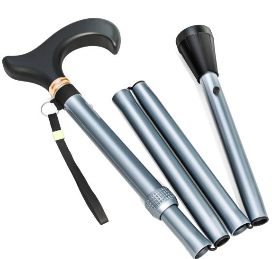
Comfortable handle design: Holding the cane for a long time, the comfort of the handle directly affects the user experience. The handle should conform to ergonomic design, fit the curve of the hand, be made of soft material with a certain degree of friction, and prevent the cane from slipping off when the hand sweats. Some handles also have shock absorption function, which can reduce the vibration and pressure caused by the weight of the body on the hands, making the hands of the elderly more comfortable during use.
Portability and Foldable Design: For elderly people who frequently engage in outdoor activities, the portability of crutches is also important. Foldable crutches can be easily stored and carried when not in use. Some crutches use simple folding methods, such as two-stage or three-stage folding, which are compact in size and can be placed in backpacks or car trunks after folding. At the same time, the folded cane should be easy to secure and not unfold on its own during carrying.
The cane plays an indispensable auxiliary role in outdoor sports for the elderly, and choosing the cane correctly is a prerequisite for fully utilizing its advantages. By comprehensively considering the material, height adjustment, stability, and other functional details, we can select suitable canes for the elderly, allowing them to enjoy the fun of outdoor sports while ensuring safety and comfort.